
Sewing Against the Approved Construction
Bathrobe sewing begins after the cut components have been identified by style, color and size. Robenexa assembles terry, waffle, cotton, fleece, satin and bamboo-blend robes for hotel suppliers, importers, wholesalers and private-label buyers.
The sewing team follows the approved sample, pattern and product specification. These references define the robe construction, seam type, collar or hood shape, pocket position, belt-loop placement, hems, labels and finished measurements.
Different materials require different handling. Heavy terry creates thicker seam areas, fleece has a directional pile, waffle fabric can stretch or distort, and satin requires control of puckering and surface marks.
Sewing Operations by Fabric and Construction
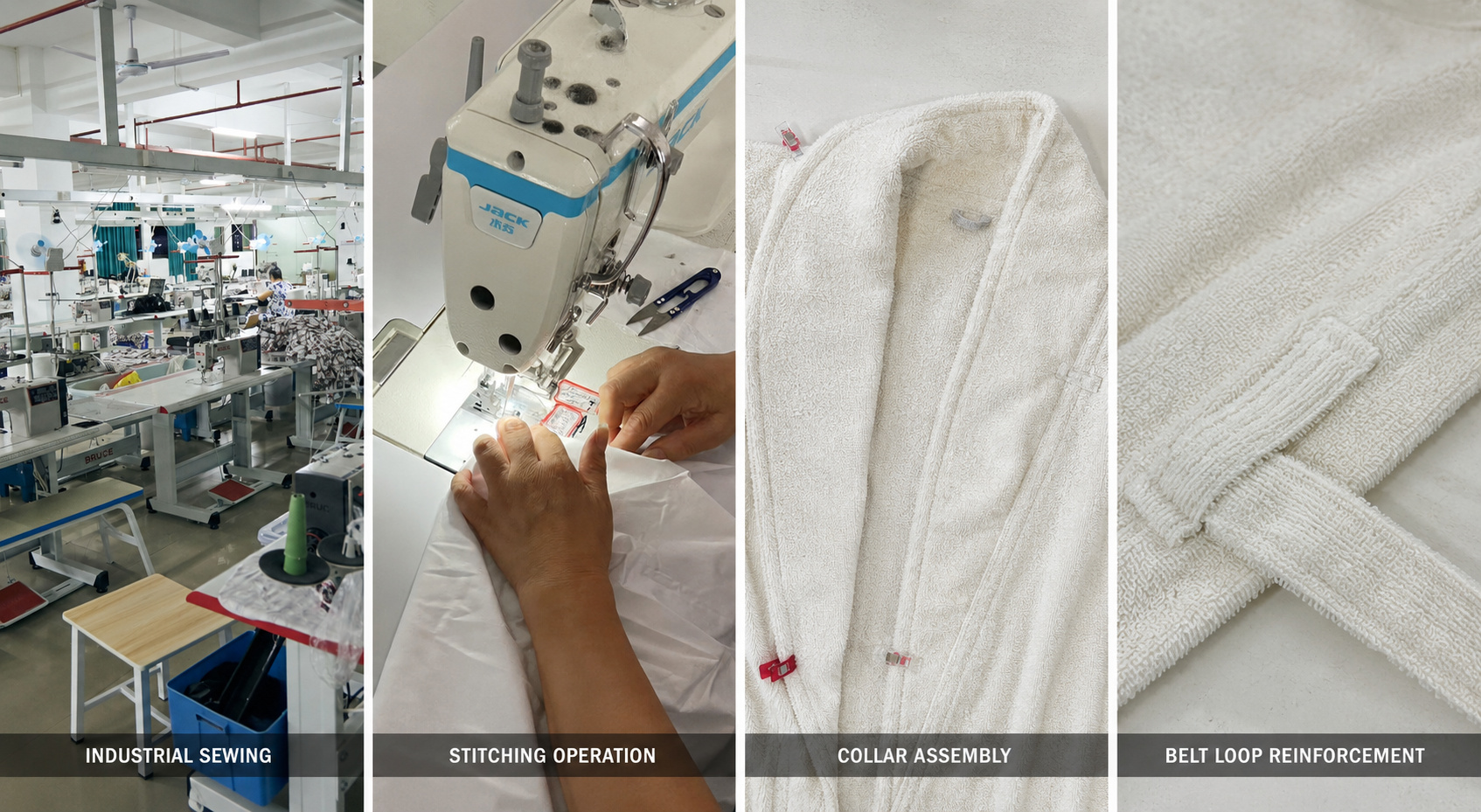
Lockstitch, overlock, coverstitch and bartack operations are selected according to the fabric and construction requirement. Not every seam uses the same stitch type.
Overlock stitching is commonly used to secure internal fabric edges. Lockstitch may be used for pockets, collars, labels and other visible construction details. Coverstitch can support selected hems, while bartack reinforcement may be used at stress points such as belt loops or pocket openings.
Thread type, color and stitch appearance should match the approved sample. Stitch density must also suit the fabric: unsuitable settings can cause seam puckering, damaged loops, weak attachment or uneven presentation.
 Body, Sleeve and Collar Assembly
The front and back body panels are joined according to the approved construction. Sleeves are attached with attention to seam alignment and mobility, while cuffs or sleeve hems are completed to the specified dimensions.
Kimono robes require clean front-edge and neckline construction. Shawl-collar robes need balanced collar width, smooth attachment and symmetry on both sides. Hooded bathrobes require alignment between the hood, neckline and front opening.
These structures are determined during Size & Style Development and transferred into production through approved patterns. Accurate components from Pattern Making & Cutting help reduce alignment and measurement problems during sewing.
Pocket, Belt and Belt-Loop Placement
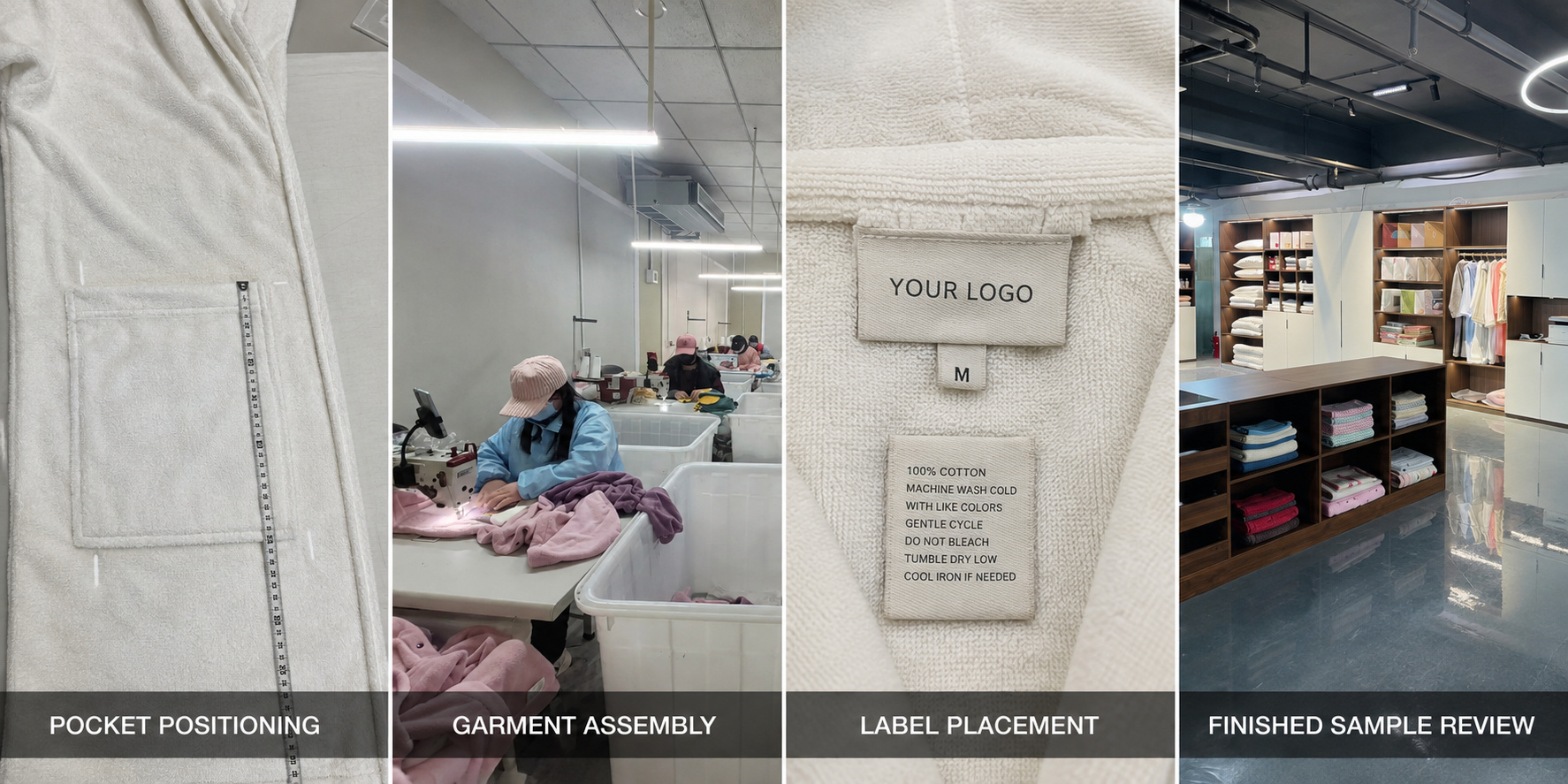
Pockets should be positioned evenly against the confirmed measurement points. Their size, opening, shape and stitching method affect both appearance and daily use.
Belt loops need secure attachment and consistent placement so the belt sits at the intended height. The belt is sewn to the confirmed length and width, with finished edges checked for distortion or loose stitching.
Pocket corners, belt loops and other stress points may require additional reinforcement according to the robe construction. These details should be confirmed in the sample rather than changed during bulk assembly.
Labels and Private-Label Components
Woven brand labels, care labels and size labels are sewn at the approved locations. Label dimensions, folding method, wording and placement should be confirmed before bulk attachment.
Care labels must correspond with the supplied fabric information and buyer-approved instructions. Size labels must match the garment size and packing breakdown. More details are available on our Labels & Private Label page.
 In-Process Sewing Checks
Checks are carried out during assembly so visible problems can be identified before all garments reach finishing. Typical review points include:
- Seam security and stitch appearance
- Collar, hood and front-opening symmetry
- Sleeve and cuff alignment
- Pocket size and position
- Belt-loop attachment
- Hem consistency
- Label accuracy and placement
- Loose threads and visible surface marks
A sewing issue found during production can usually be corrected more efficiently than the same issue found after final packing.
Transfer to Finishing and Inspection
After assembly, finished robes move to trimming, appearance review and measurement inspection. Garment length, chest width, sleeve measurements, collar construction and component positions are checked against the approved specification.
Accepted robes then proceed to embroidery completion where applicable, final inspection and packing. These controls are explained further on our Finishing & Measurement Inspection page.
For production review, buyers should provide the robe style, fabric, GSM, measurement chart, construction details, size breakdown, labels, branding requirements and approved sample reference.