
From Approved Measurements to Production Patterns
Bathrobe pattern making converts the approved style and size specification into individual production components. Robenexa prepares patterns for terry, waffle, cotton, fleece, satin and bamboo-blend bathrobes supplied to hotel buyers, importers, wholesalers and private-label brands.
The pattern must reflect the confirmed robe length, chest width, sleeve measurements, collar or hood construction, pockets, belt and belt-loop positions. Buyers should approve these details during sample development before the pattern is released for bulk cutting.
Kimono, shawl-collar and hooded bathrobes require different component shapes and assembly sequences. Adult, kids and buyer-specific size ranges also need separate pattern grading. These requirements can be developed through our Size & Style Development process.
Pattern Components and Measurement Points
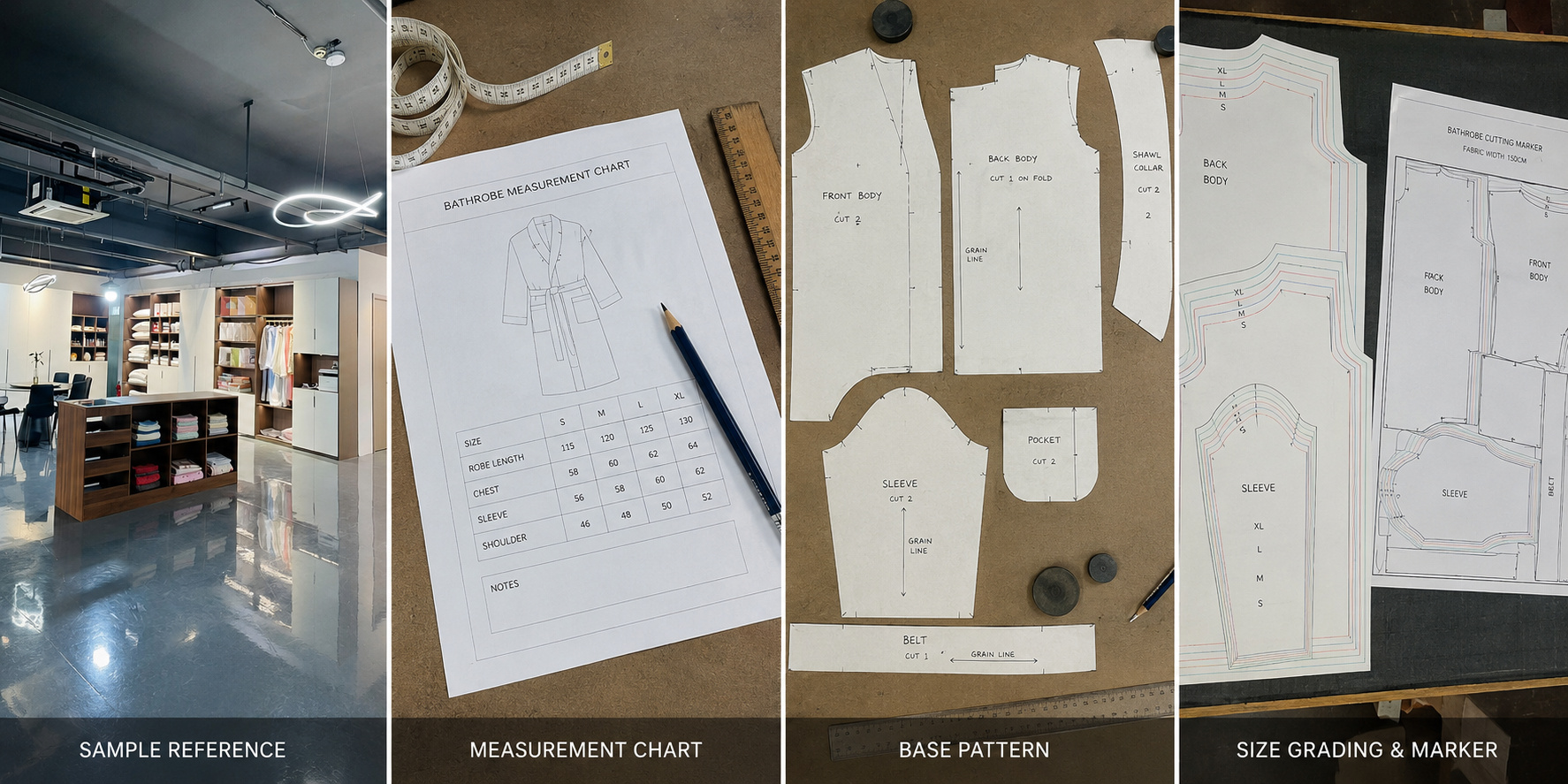
A typical bathrobe pattern may include the front and back body, sleeves, collar or hood, pockets, belt, belt loops and facing or trim components. The exact set depends on the construction approved by the buyer.
Key measurements may include:
- Finished robe length
- Chest or half-chest width
- Shoulder width
- Sleeve length and opening
- Collar or hood dimensions
- Pocket size and position
- Belt length and width
- Belt-loop position
Seam allowances, hems and construction folds must be included consistently. Pattern dimensions are checked against the approved sample and measurement chart before grading or marker preparation.
 Size Grading and Cutting Markers
After the base size is approved, the pattern can be graded into the required size range. Grading is not simply an equal increase in every direction. Chest width, robe length, sleeve length, shoulder proportions and pocket placement may change at different rates.
The buyer should provide the size range and approximate quantity breakdown before bulk cutting. This information affects marker planning, fabric consumption and the number of layers required for each size.
The cutting marker arranges pattern pieces across the usable fabric width. Its layout should consider fabric direction, texture, pile and construction. Terry, waffle and fleece materials may require consistent direction, while satin requires careful placement to reduce movement and surface damage.
Fabric Allowance and Cutting Preparation
Fabric composition, GSM, width and expected shrinkage can affect pattern allowance and material consumption. A heavier terry robe normally uses more material and creates bulkier cut components than a lightweight waffle or satin robe.
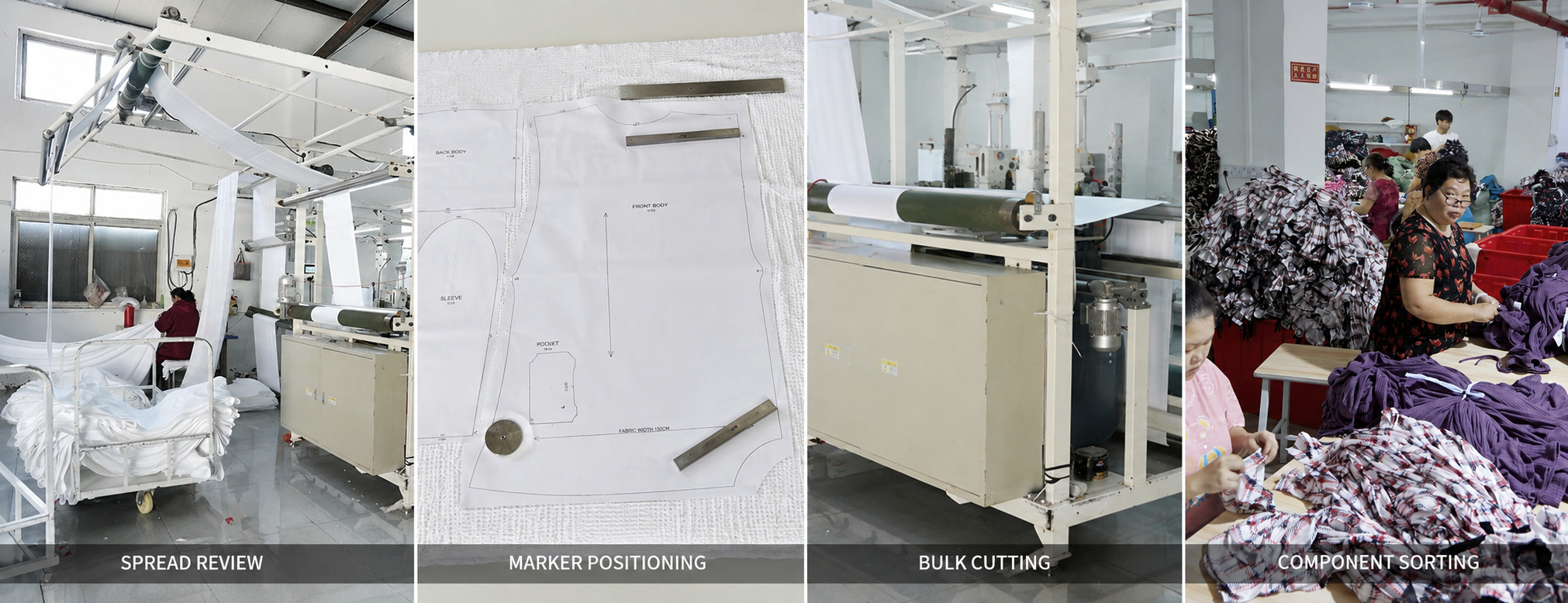
Before cutting, fabric rolls are identified, checked and spread according to the production plan. Shade groups and directional materials should remain controlled during this stage. Details of the preceding process are explained on our Fabric Inspection & Spreading page.
Any confirmed shrinkage allowance should be reflected in the pattern or finished-measurement planning. Actual shrinkage expectations depend on the material and finishing requirements, so they should be reviewed against the approved fabric reference rather than assumed from a generic value.
Bulk Cutting and Component Identification
After the marker and fabric spread are checked, the production layers are cut into the required garment components. Cutting accuracy influences seam alignment, finished measurements and assembly efficiency.
Cut parts are grouped by order, style, color and size. Components from different shade groups should not be mixed without review. Identification also helps the sewing team receive the correct body panels, sleeves, collars, pockets and belts for each production batch.
 Cutting Checks Before Sewing
Before components are transferred to sewing, the production team can review key dimensions, component quantity, cutting edges and matching parts. Collar, pocket, sleeve and belt components should correspond with the approved construction and size.
Visible cutting problems identified at this point are easier to correct than after garment assembly. Accurate components support more consistent collar alignment, pocket placement, seam matching and finished measurements during Sewing & Assembly.
Information Needed for Pattern Development
For pattern review, buyers should provide the robe style, reference photo or physical sample, measurement chart, size range, fabric information and construction requirements.
Pocket positions, belt length, collar or hood structure, seam details and intended fit should be clearly marked. When these details are approved before bulk cutting, the Bathrobe Manufacturing process can proceed with a more reliable production reference.