
Selecting Fabric for the Intended Bathrobe Program
Robenexa supplies terry, waffle, cotton, fleece, satin and bamboo-blend bathrobes for hotels, spas, importers, wholesalers, retail chains and private-label brands. Fabric selection should begin with the intended application rather than appearance alone.
A hotel bathrobe may prioritize absorbency, washing performance and repeat-order consistency. A spa program may require a lighter construction and shorter drying time. Fleece bathrobes are generally developed for seasonal wholesale and retail collections, while satin robes are more suitable for beauty, bridal, promotional and presentation-focused programs.
Before quotation, buyers should confirm the preferred fabric construction, fiber composition and target GSM whenever these details are available. A reference bathrobe, fabric swatch or existing specification can also help us identify a suitable development direction.
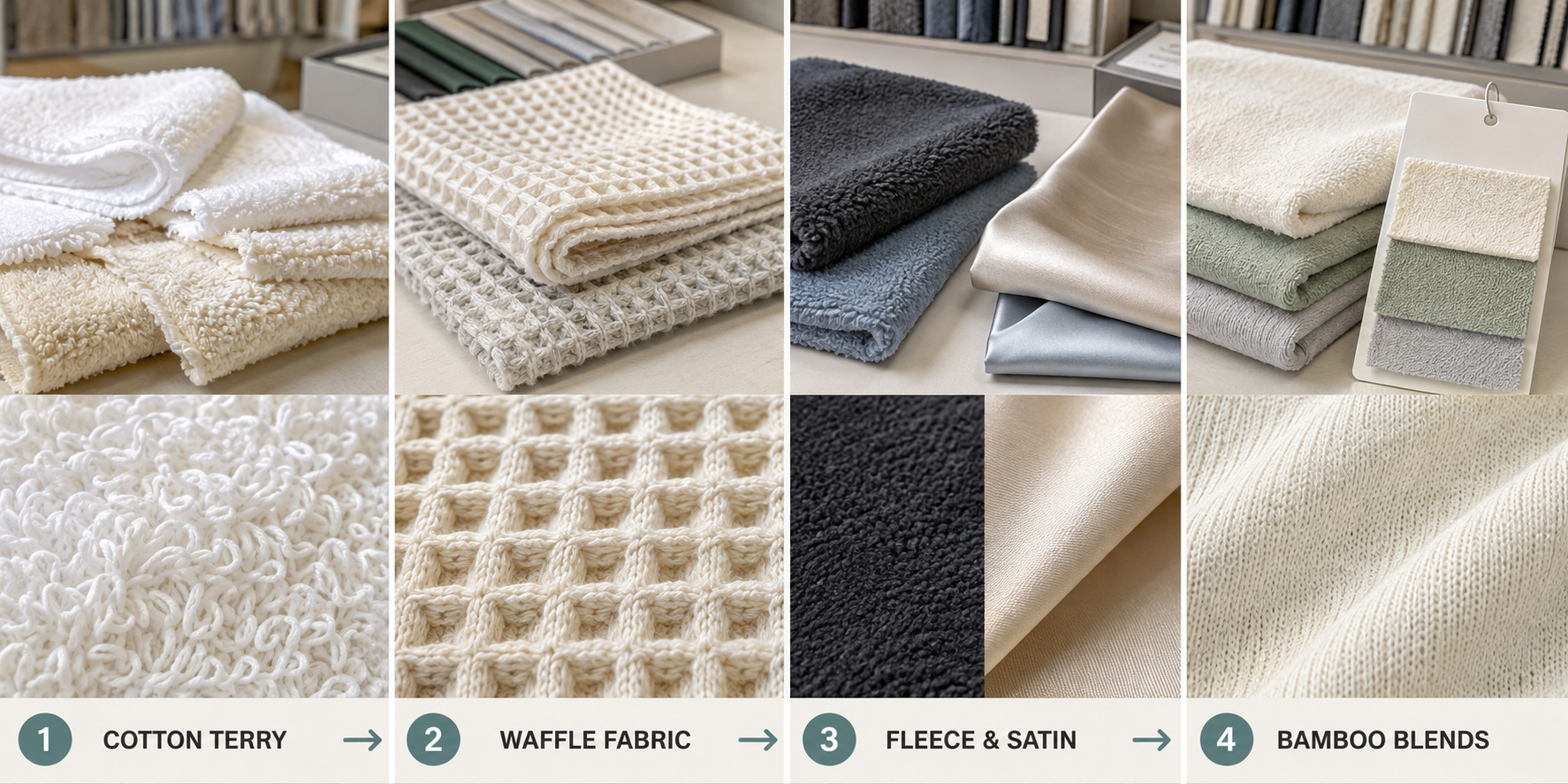 Terry, Waffle and Cotton Constructions
Cotton terry is commonly selected for hotel, spa and bath-linen programs where loop-pile absorbency and garment weight are important. The quotation and sample should define the composition, target GSM, robe dimensions, collar construction and finished appearance.
Waffle fabric offers a lighter and more compact construction. It is often used for hotels, resorts, spas and wellness projects where lower packing volume and faster drying are purchasing considerations. Buyers should confirm the waffle pattern, composition, fabric weight and expected finished dimensions.
“Cotton bathrobe” describes the fiber content but does not fully define the fabric. Cotton robes may use terry, waffle, velour or another construction. The exact structure must therefore be recorded in the product specification instead of relying on the word “cotton” alone.
Fleece, Satin and Bamboo-Blend Options
Polyester fleece provides a soft, warm surface for seasonal retail, private-label and wholesale programs. Development details normally include the fleece type, fabric weight, pile appearance, color, adult or kids’ sizing, hood or collar construction and retail packing.
Satin is used for lightweight robes where surface finish, color, trim, seam appearance and presentation packaging are important. Because satin is lighter and smoother than terry or fleece, the sample should be checked carefully for seam puckering, snags and overall drape.
Bamboo-blend robes must be quoted against a confirmed fiber composition. The percentage and type of each fiber should be identified in the order specification and supported by the applicable material documentation. Robenexa does not treat “bamboo” as a complete technical specification without confirming the actual blend.
How GSM Affects the Finished Bathrobe
GSM indicates fabric weight per square meter, but a higher GSM does not automatically mean the material is better for every order. It affects garment weight, absorbency, warmth, drying time, packing volume and material cost.
The same target GSM can produce a different hand feel depending on fiber composition, pile structure, finishing and fabric construction. A GSM figure should therefore be evaluated together with a physical fabric or finished robe sample.
Detailed garment dimensions and construction requirements can be coordinated through our Size and Style Development process.
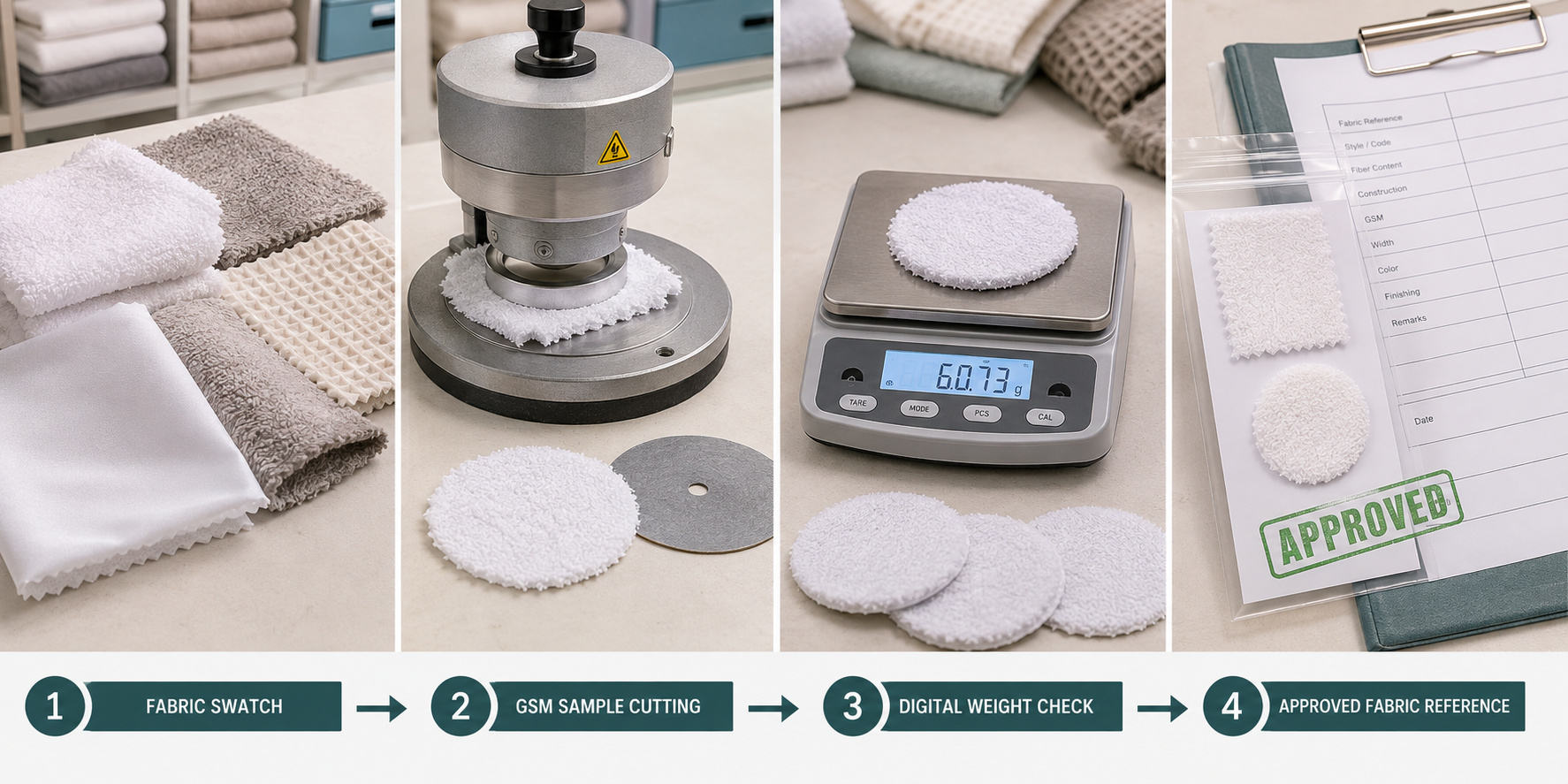 Fabric and GSM Sample Approval
Fabric development begins by comparing the proposed material with the buyer’s target application, specification or reference sample. The approved sample should record the fabric construction, composition, target GSM, color and relevant finishing details.
Bulk fabric is checked for appearance, shade and required weight before spreading and cutting. When laboratory composition or performance testing is required, the testing scope, sample quantity, cost and applicable standard should be confirmed for the specific order.
Standard samples normally take 5–10 days. New fabric, color or construction requirements may extend development to around 10–15 days, depending on material availability.
MOQ, Cost and Quotation Information
Standard bathrobe programs usually start at approximately 300–500 pieces per style. Fabric development, special colors or deeper customization may require around 800–1,500 pieces because material suppliers can apply separate minimum quantities.
Fabric composition, GSM, color and total quantity directly affect the quotation. Buyers should provide the robe style, intended use, preferred material, target GSM, dimensions, order quantity, color, branding, packaging and destination.
After the fabric and product sample are approved, bulk production generally takes around 25–40 days. The selected material is carried into cutting, sewing, finishing and inspection through the documented Bathrobe Manufacturing Process. For a complete project review, see our Custom OEM Bathrobes page.