
 Bathrobe Production for B2B Orders
Robenexa manufactures terry, waffle, cotton, fleece, satin and bamboo-blend bathrobes for hotel and spa suppliers, importers, wholesalers, private-label brands, retail chains and project buyers.
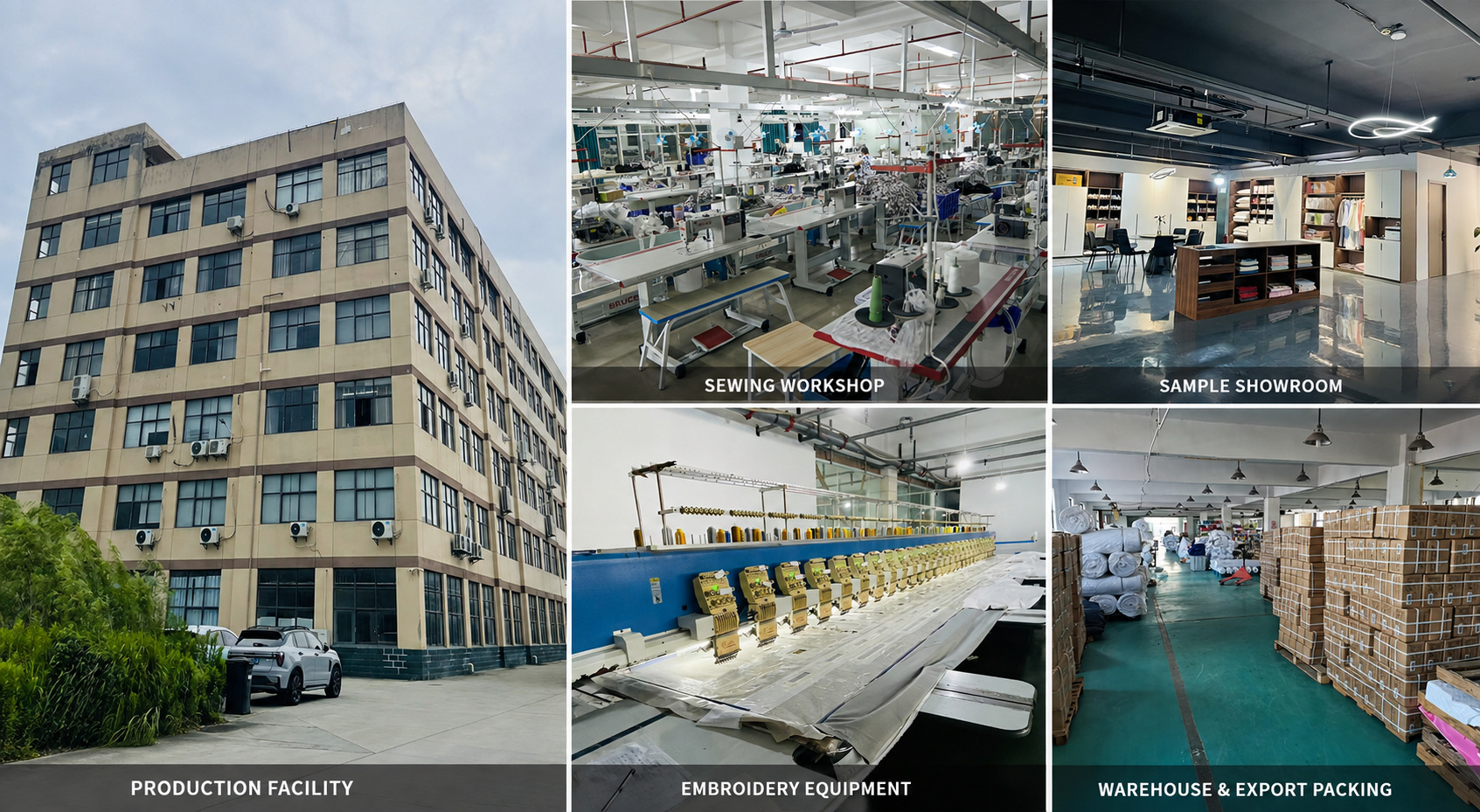
Our production facility is located in Yidong Industrial Park, Yiwu, Zhejiang, China. Approximately 140–170 employees support fabric preparation, cutting, sewing, embroidery, finishing, inspection and packing. Typical monthly output is around 70,000–100,000 bathrobes, depending on fabric weight, garment construction, embroidery, packaging and the mix of orders in production.
Manufacturing begins from an approved product reference. Fabric composition, GSM, robe construction, measurements, color, branding and packaging are confirmed before bulk materials and production are released. This reduces avoidable differences between the quotation, sample and finished order.
Material Confirmation and Fabric Preparation
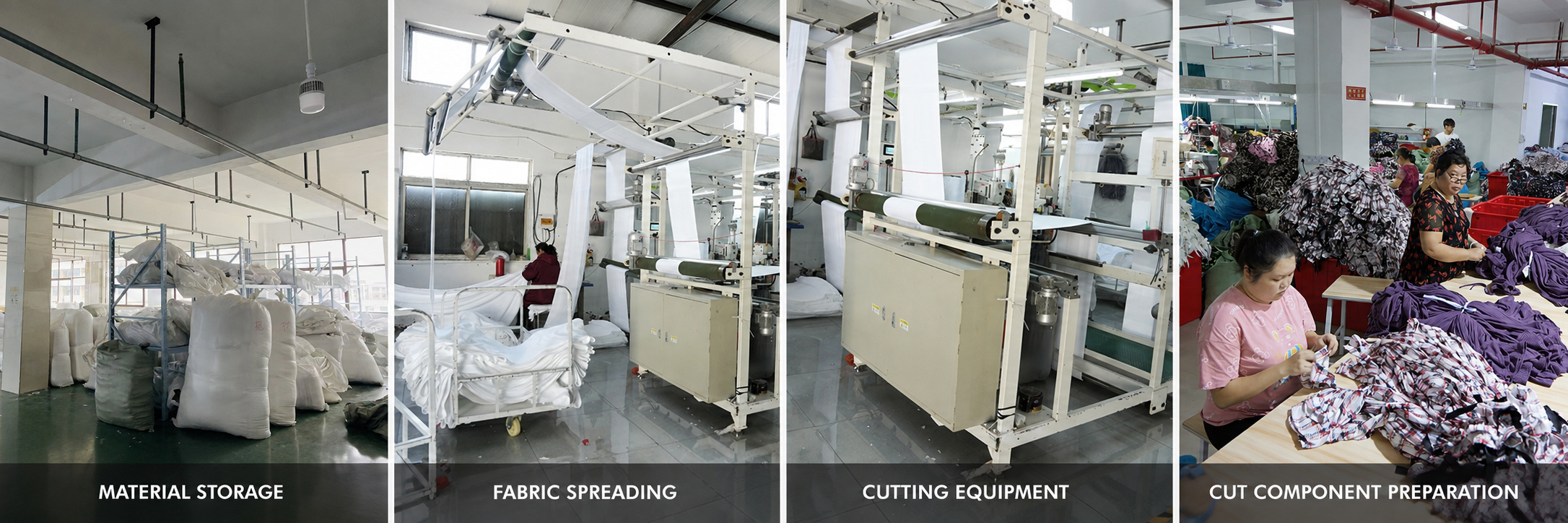
Different bathrobe categories require different material controls. Terry and bamboo-blend robes depend heavily on fabric weight, absorbent construction and shrinkage expectations. Waffle fabric requires attention to texture, stability and finished measurements. Fleece and satin require different handling during spreading, cutting and sewing.
Incoming fabric is reviewed for color, surface appearance and required weight. Fabric rolls are then prepared for spreading according to the cutting plan. Shade differences, visible defects or inconsistent surface conditions should be identified before cut components enter sewing.
The detailed checks used at this stage are explained on our Fabric Inspection & Spreading page.
Pattern Making and Cutting
The approved size specification is transferred into production patterns for the robe body, sleeves, collar or hood, pockets, belt and other components. Kimono, shawl-collar and hooded robes each require a different pattern structure and sewing sequence.
Before bulk cutting, pattern dimensions and key measurement points should correspond with the approved sample. Fabric width, pile direction, waffle alignment and shrinkage allowance can affect material consumption and finished size.
After spreading, the fabric is cut according to the confirmed marker and size breakdown. Cut components are identified and kept together to reduce size or shade mixing. More information about this stage is available under Pattern Making & Cutting.
Sewing and Garment Assembly
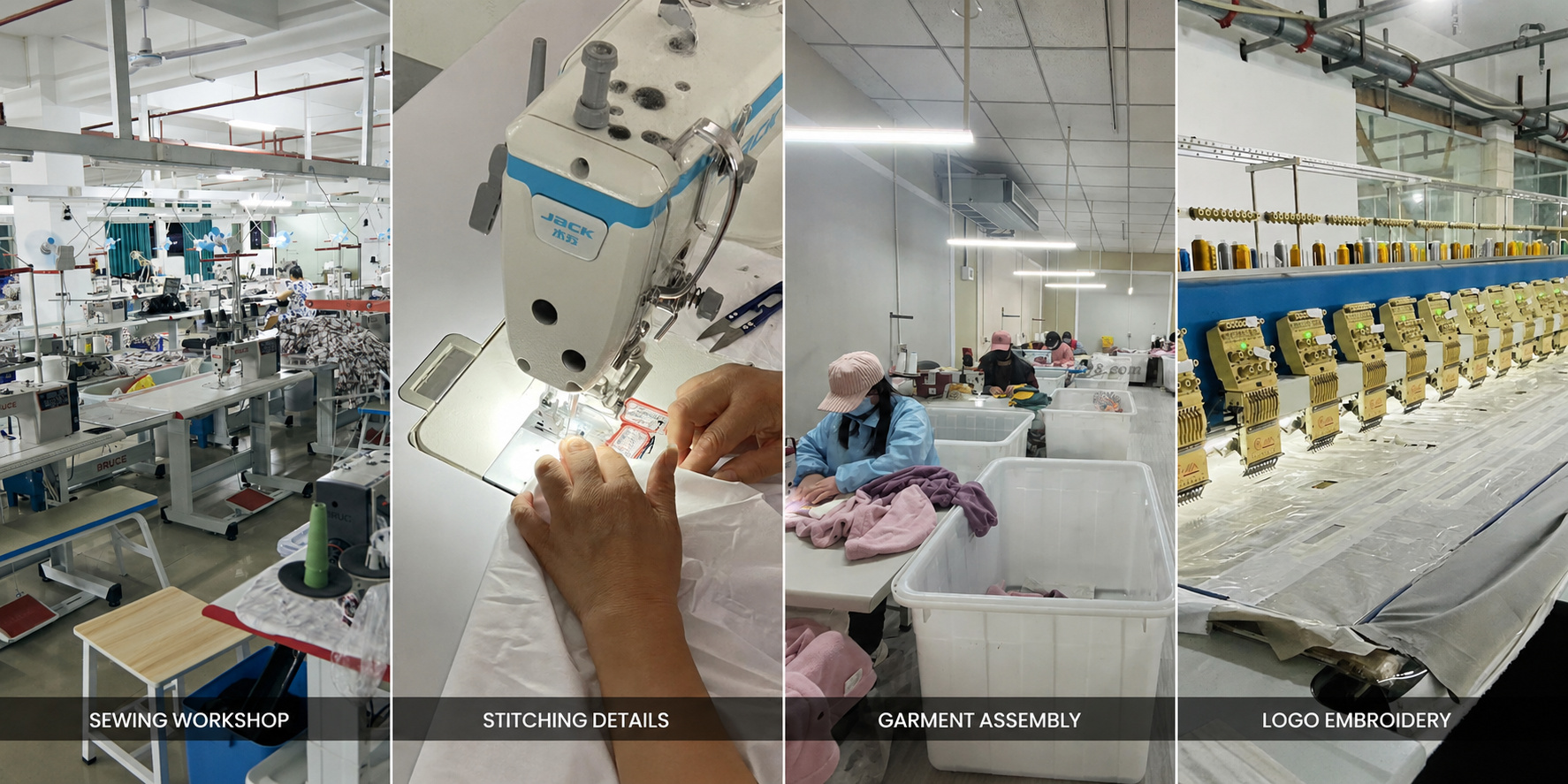
Bathrobe assembly may involve lockstitch, overlock, coverstitch and bartack operations, selected according to the fabric and garment construction. The body, sleeves, collar or hood, pockets, belt loops and hems are joined in a planned sequence.
In-process checks focus on seam appearance, stitch security, component alignment and construction details. Pocket position, collar symmetry, belt-loop attachment and hem consistency influence both the appearance and practical use of the finished robe.
Heavy terry fabric requires suitable seam handling to avoid bulky or uneven joins. Lightweight satin requires control of puckering, edge distortion and surface marks. The Sewing & Assembly page explains how these construction details are handled.
 Embroidery and Private-Label Application
Where embroidery is required, the logo artwork, embroidery file, thread colors, dimensions and placement are confirmed before bulk application. A test embroidery helps assess the result on the selected fabric because dense terry loops, waffle texture, fleece pile and satin surfaces do not produce identical logo effects.
Woven labels, care labels and size labels are attached at the confirmed locations during or after garment assembly. Hangtags and barcode labels are generally applied during finishing and packing. Branding components must correspond with the approved style, color and size breakdown.
Finishing and Measurement Inspection
After sewing, garments are trimmed and reviewed for loose threads, visible marks, seam condition, embroidery appearance and overall presentation. Finished measurements are checked against the approved specification, with attention to robe length, chest width, sleeve length, shoulder dimensions and belt or pocket positioning where applicable.
Inspection is not limited to the final packed product. Fabric, cutting, sewing, embroidery and measurements are checked at relevant production stages so problems can be identified before the complete order reaches final inspection.
For customized programs, the approved sample and production specification remain the main references for workmanship, dimensions, branding and packing.
Individual Packing and Export Preparation
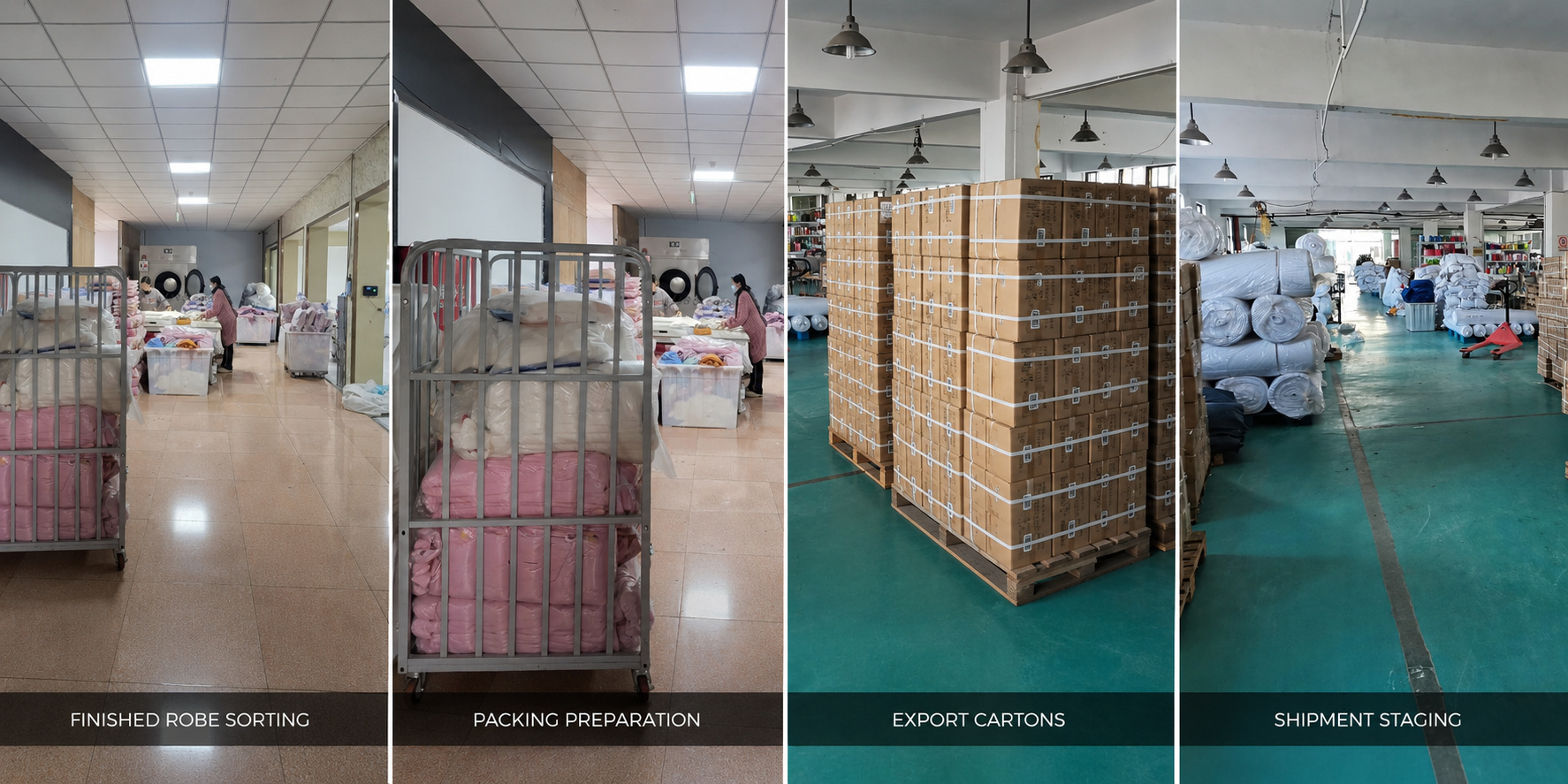
Finished bathrobes are folded according to the confirmed method and packed in individual polybags, recycled polybags, belly bands, gift boxes or retail boxes as required. Size labels, hangtags, barcodes and packaging artwork are checked against the order breakdown.
Export cartons are prepared according to the confirmed quantity per carton, carton dimensions, shipping marks and sealing requirements. Final checks may cover garment style, color, size, logo position, individual packaging, barcode, carton quantity and exterior markings.
 Production Timing and Order Information
Standard bathrobe samples typically take 5–10 days. More detailed fabric, color, construction or branding development may take around 10–15 days. Bulk production generally takes approximately 25–40 days after the sample, specifications and order details are approved.
Production timing depends on fabric availability, order quantity, size breakdown, embroidery, labels and packaging requirements. Changes after approval may affect material purchasing and the planned production schedule.
For a production review, buyers should provide the robe style, fabric composition or target GSM, dimensions, quantity, size breakdown, colors, branding files, packaging requirements and destination. These details allow the manufacturing team to evaluate feasibility, sampling, MOQ, timing and packing before the bulk order is released.