
Why Fabric Checks Begin Before Cutting
Fabric condition directly affects bathrobe appearance, measurements, sewing efficiency and bulk-order consistency. Robenexa checks incoming materials before spreading so visible problems can be identified before the fabric is converted into cut components.
The inspection approach depends on the material. Cotton terry is reviewed for loop condition, surface defects, weight and shade. Waffle fabric requires attention to texture, distortion and dimensional stability. Fleece is checked for pile appearance and direction, while satin requires careful handling to avoid marks, creases and surface damage.
Inspection is carried out against the approved order requirements. It does not replace destination-market testing or third-party laboratory verification when these are required by the buyer.
Incoming Fabric Identification
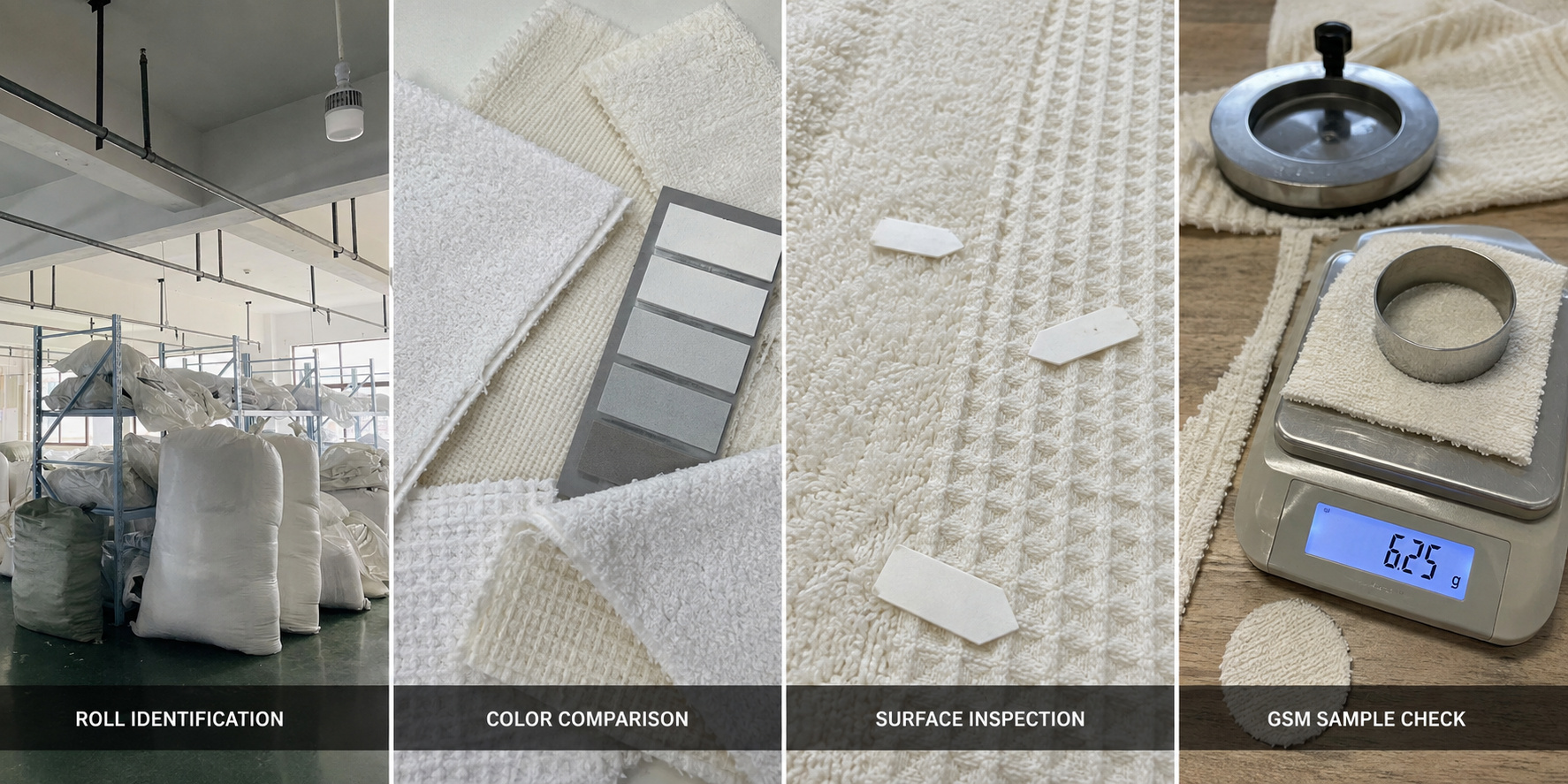
Each fabric delivery should correspond with the confirmed composition, construction, color and target GSM. Roll identification helps the production team separate materials by order, style, color or batch before spreading.
The review may cover:
- Fabric type and order reference
- Roll quantity and visible roll condition
- Color and shade consistency
- Surface appearance and obvious defects
- Required fabric width and target weight
- Pile or texture direction where applicable
Fabric composition and GSM requirements should be defined during product development. Buyers can review the available development considerations on our Fabric & GSM Options page.
 Color, Surface and GSM Review
Bulk fabric is compared with the approved color or material reference. The assessment should consider shade differences between rolls because mixing noticeably different shades in one garment or size batch can affect presentation.
Surface checks focus on visible issues relevant to the fabric construction. Terry fabric may show irregular loops, pulled yarns or uneven areas. Waffle material can have distorted cells or inconsistent texture. Fleece requires attention to pile appearance, while satin may show snags, creases or surface marks.
GSM can influence absorbency, warmth, packing volume and product cost. Fabric weight is therefore checked against the confirmed specification where applicable. GSM is only one factor: two materials with similar weight can still differ in fiber composition, weave, pile and finished performance.
Fabric Relaxation and Spreading Preparation
Some fabrics need time to relax after being unrolled or moved from storage. This helps reduce tension before spreading and cutting. The practical relaxation requirement depends on the material construction and order specification.
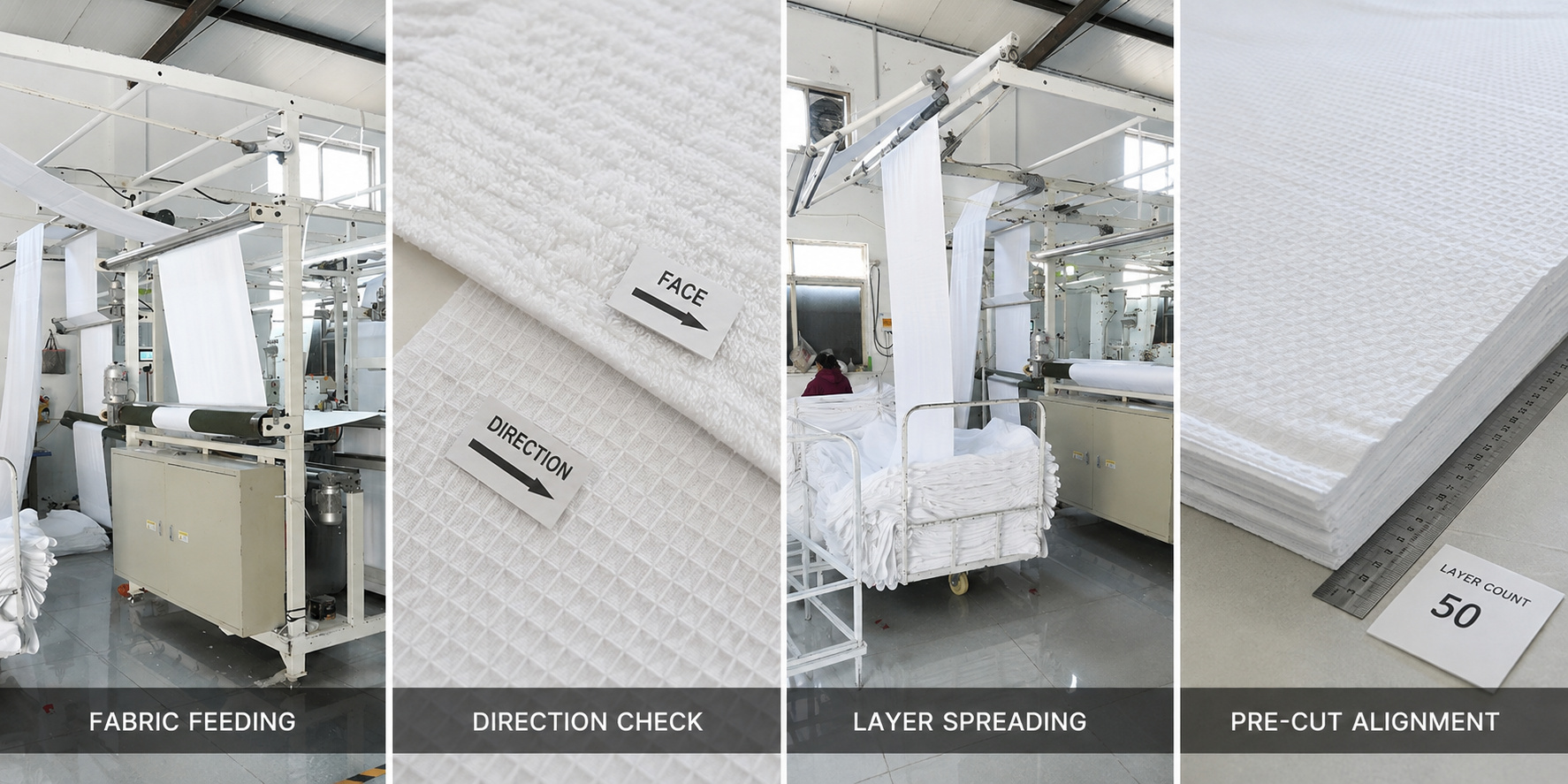
Before spreading, the team confirms the fabric face, pile direction, shade grouping and required number of layers. The cutting plan and size breakdown are also reviewed so the spread corresponds with the approved production quantity.
Terry, fleece and directional materials should be laid consistently to prevent visible differences between garment components. Satin and other smoother fabrics require controlled alignment to reduce movement between layers.
Fabric Spreading for Accurate Cutting
Fabric is laid evenly on the spreading table or production line without excessive tension, folds or edge distortion. Layer alignment is checked during spreading because uneven layers can lead to inaccurate components and measurement variation after sewing.
The spread length and layer count are determined by the cutting marker, fabric width, order quantity and size breakdown. Roll changes are recorded or separated where necessary to reduce shade mixing.
 Defect Marking and Material Control
Visible fabric defects identified during inspection or spreading should be marked, isolated or avoided where practical. The appropriate action depends on the defect location, size and effect on the finished robe.
Material control also includes monitoring usable width and unexpected fabric loss. If the delivered material differs from the confirmed specification, it may affect consumption, cutting quantity or production timing. Significant issues should be reviewed before continuing with the affected fabric.
Transfer to Pattern Making and Cutting
After spreading is complete, the cutting marker is positioned according to the planned robe style and size breakdown. Body panels, sleeves, collars or hoods, pockets, belts and belt loops must follow the confirmed pattern dimensions.
Prepared fabric then moves to Pattern Making & Cutting. Cut components are identified by style, color and size before being transferred to sewing.
Fabric inspection and spreading form part of the complete Bathrobe Manufacturing process. Clear material specifications, approved references and early identification of visible problems help support more consistent bulk production.