
Branding Starts with an Approved Reference
Bathrobe embroidery must be confirmed against the actual fabric, logo artwork and garment position before bulk production. Robenexa supports embroidered branding for hotel suppliers, importers, wholesalers, private-label brands and project buyers.
Terry, waffle, fleece, satin and other bathrobe materials do not produce identical embroidery results. Fabric texture, pile height, stretch and weight can affect stitch coverage, edge definition and the stability of the embroidered area.
The approved reference should define the logo size, position, thread colors and appearance. Bulk embroidery is then produced against these confirmed details rather than a generic logo request.
Logo Artwork and Embroidery File Preparation
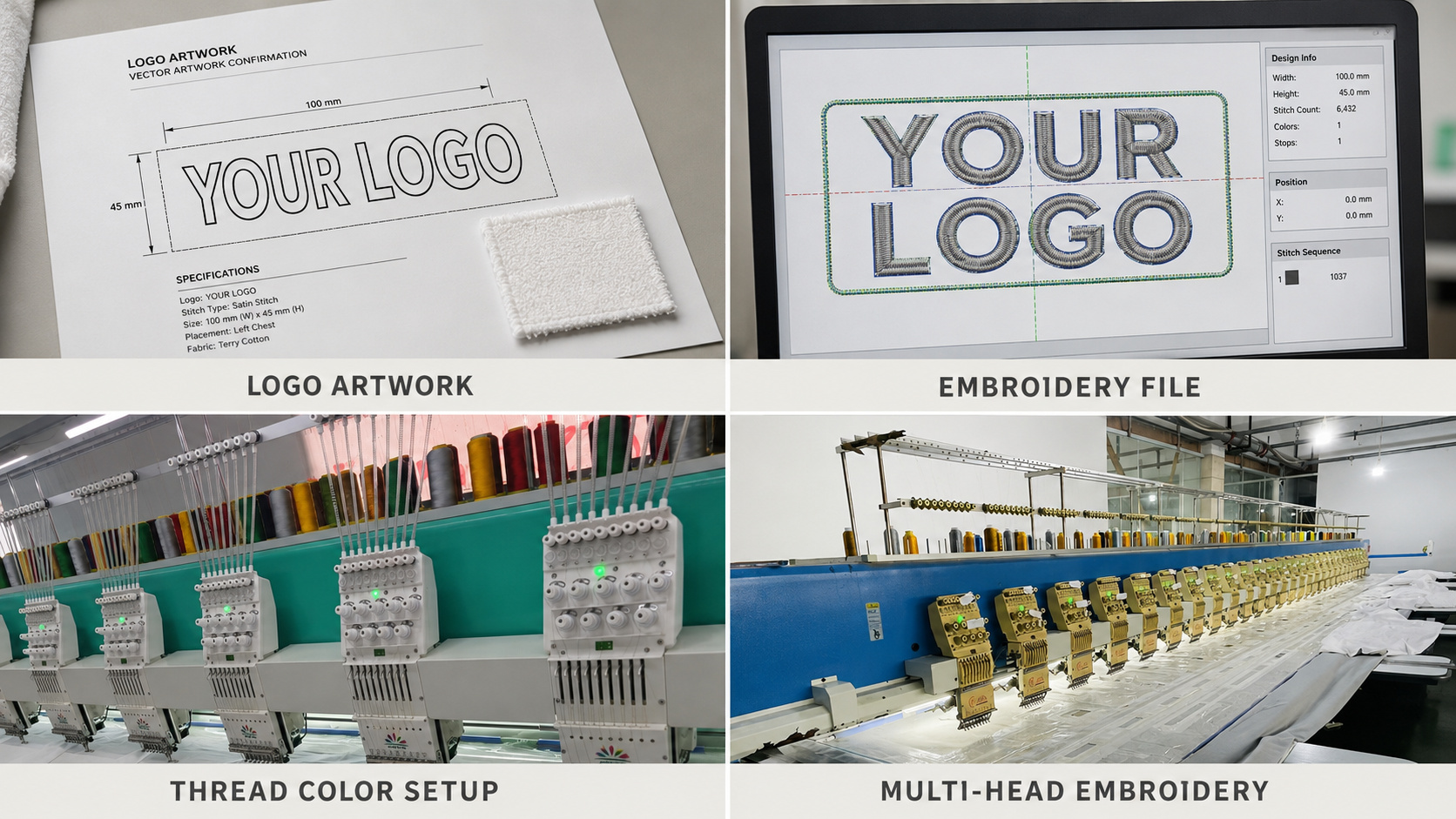
Vector artwork in AI, EPS or PDF format is preferred for embroidery development. The artwork is converted into a machine-readable embroidery file according to the logo shape, finished dimensions and selected fabric.
Small lettering, narrow gaps, fine outlines and dense filled areas may need adjustment. A logo that appears clear on a screen may not reproduce cleanly with thread, especially on high-loop terry fabric.
The embroidery file should be reviewed together with:
- Finished logo dimensions
- Stitch direction and density
- Letter spacing and edge definition
- Thread-color references
- Garment position
- Fabric type and GSM
Further artwork preparation details are available on our Logo & Embroidery development page.
 Thread Color and Material Compatibility
Thread colors are selected against the buyer’s approved reference. A physical thread card or sample provides a more practical production reference than an on-screen color alone.
Color appearance can change under different lighting and against different robe colors. Light thread on dark fabric may require sufficient coverage, while dark embroidery on dense terry loops needs controlled stitch settings to maintain clean edges.
The same embroidery file may require adjustment when transferred between terry, waffle, fleece and satin materials. Test embroidery should therefore use the actual order fabric or a sufficiently representative material.
Test Embroidery and Placement Confirmation
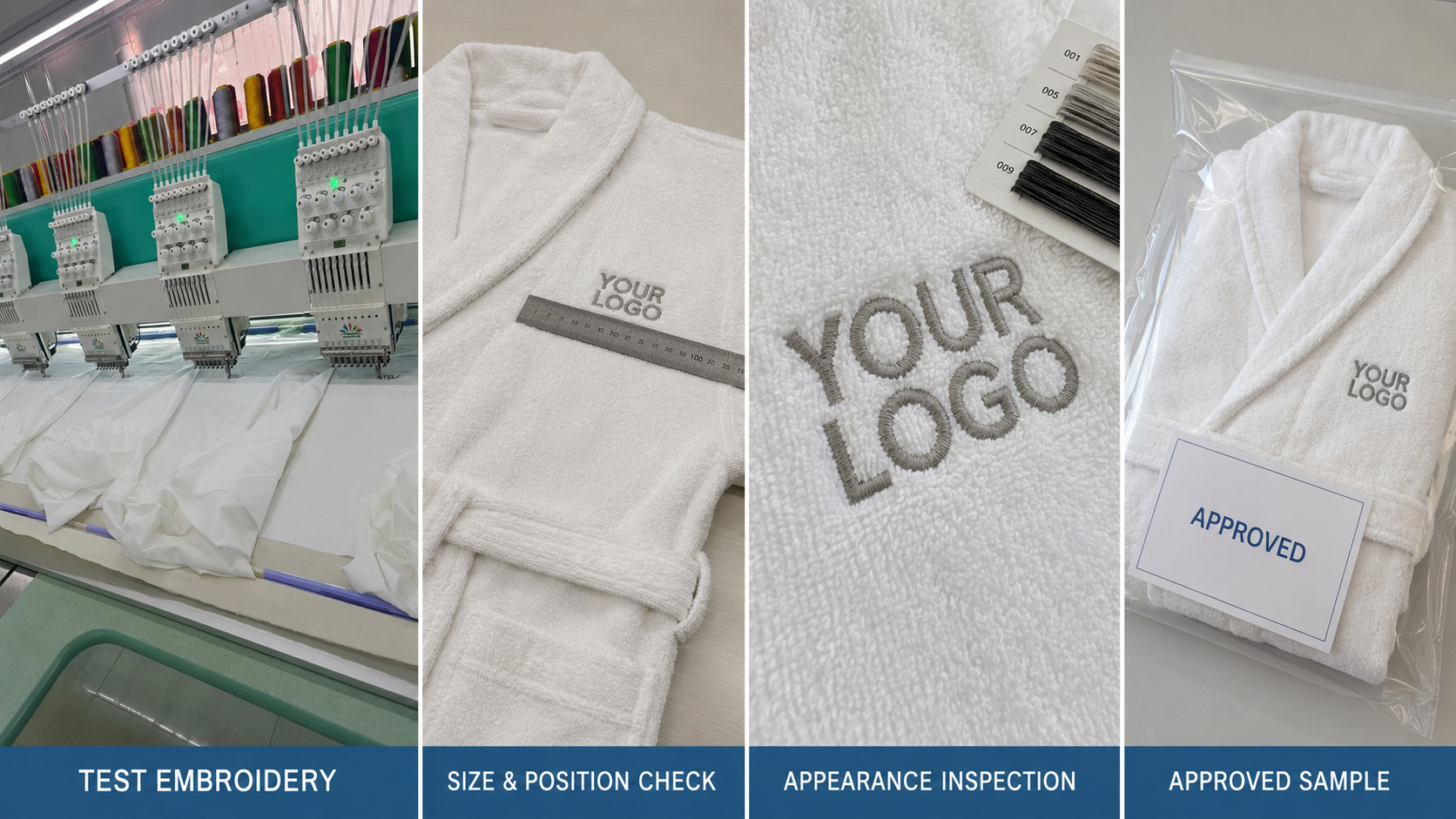
A test embroidery is prepared before bulk application. It allows the buyer and production team to review the logo dimensions, thread colors, stitch appearance and fabric response.
Placement should be measured from agreed garment reference points. Common locations include the chest, sleeve, pocket, back or another buyer-specified area. The approved specification should define both the logo size and its distance from the relevant seam or edge.
A visually acceptable logo in the wrong position is still a production error. Position confirmation is therefore recorded together with the embroidery sample.
Bulk Embroidery Production
After approval, garment panels or assembled robes are prepared for computerized embroidery according to the production sequence. The suitable timing depends on the logo position and garment construction.
Multi-head embroidery equipment supports repeated logo application across bulk orders. During production, attention is given to fabric positioning, hooping stability, thread condition and consistency between embroidery heads.
Embroidered components must remain identified by style, color and size so they return to the correct Sewing & Assembly batch.
 Labels and Other Branding Components
Embroidery may be combined with woven brand labels, care labels, size labels, hangtags and barcode stickers. These components should follow the same approved branding file and order breakdown.
Labels are attached at confirmed garment positions, while hangtags and barcodes are generally added during finishing and packing. Buyers can review these requirements under Labels & Private Label.
Embroidery Inspection Before Packing
Completed embroidery is checked for visible thread breaks, loose threads, puckering, incorrect colors, unclear edges and placement differences. Logo dimensions and position are compared with the approved reference where required.
The surrounding fabric is also reviewed for marks, damage or distortion caused during handling. Accepted robes proceed to trimming, measurement inspection and packing through the Finishing & Measurement Inspection stage.
For an embroidery review, buyers should provide vector artwork, target dimensions, placement, thread-color reference, robe style, fabric, color, quantity and sample-approval requirements.